
The Capacity Conversations
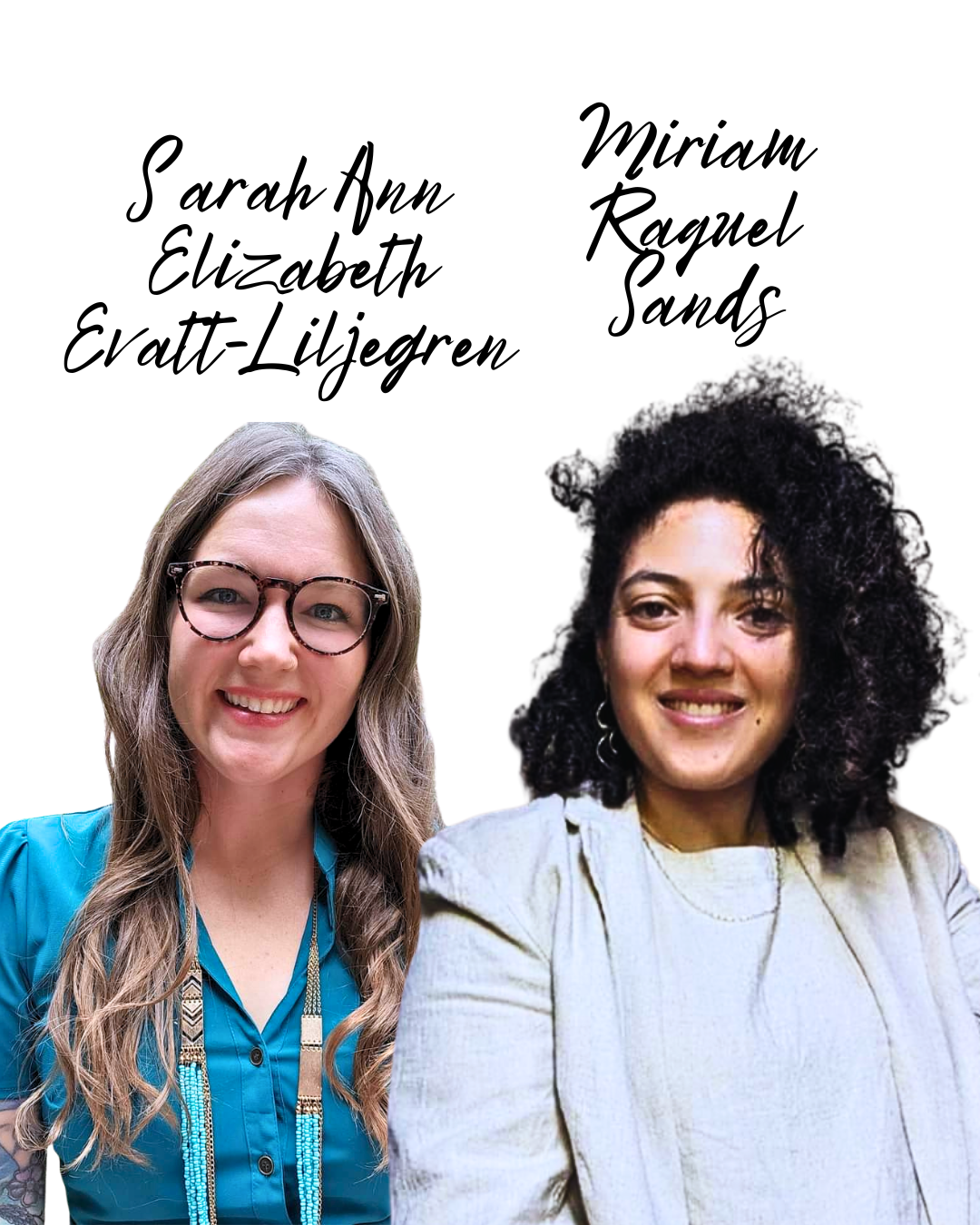
Welcome to The Capacity Conversations. Where two women from each coast (Sarah on the west coast, Raquel on the east coast) have challenging and curious dialogue about self-trust, transformation, and the reality every modern millennial is facing today: do we actually have the capacity to do all the things we want to do?
✳︎
Does the next generation have the human capacity to do every thing they want (or are expected) to do?
✳︎ Does the next generation have the human capacity to do every thing they want (or are expected) to do?
Episode 1. June 2025
Our origin stories.
Episode 2. July 2025
How did we get here?
Episode 3. August 2025
Deficiencies.
Episode 4. September 2025
Balance, equinox season, and zombies.
Episode 5. October 2025
Survival skills.
Episode 6. November 2025
Political correctness.
Episode 7. January 2026
Darkness, incubation, and imbibition.
Episode 8. February 2026
FAITH vs faith.
Episode 9. TBD
Episode 1.
In our first episode, we explore where our sense of capacity really comes from—and who taught us what we were allowed to want, need, or become. Raquel and Sarah unpack how inherited identities, cultural expectations, nervous system patterns, and early survival roles shape who we think we are, and how understanding our origin stories is the first step toward expanding capacity and choosing a different future.
Episode 4.
Using the Fall Equinox as a metaphor for balance and transition, this episode explores the zombie as a symbol of living half-alive—rooted in histories of slavery, colonialism, and extracted labor, and echoed today in grind culture, numb relationships, rote spirituality, and digital overload. Tracing the zombie from its Afro-Caribbean origins to modern pop culture, we ask where we’ve become zombified in our own lives—and offer the remedy: reclaiming faith as trust and aliveness as presence, creativity, and vitality, so we can move from survival back into balance.
Episode 3.
This episode examines why so many of us feel exhausted and limited in capacity by redefining “deficiency” not as personal failure, but as a loss of choice shaped by systems, history, and inherited responsibility. Raquel and Sarah explore how economic, emotional, digital, spiritual, and cultural deficiencies are produced by structures that limit time, access, ownership, and agency—especially for marginalized communities—and how this leads to burnout, numbness, addiction, and living on autopilot. The conversation closes with a path toward balance: reclaiming ownership through boundaries, redefining what is truly ours to carry, rebuilding trust in ourselves, and offering grace for the realities we cannot fix all at once.
Episode 6.
This episode examines how political correctness, originally rooted in respect and inclusion, has evolved into a culture of self-censorship that limits honest dialogue, emotional resilience, and real connection. Raquel and Sarah explore how globalized technology has expanded what we’re expected to care about far beyond human capacity, leaving younger generations hyper-aware but under-equipped, scattered, and depleted. The conversation argues that true inclusion and compassion come not from silencing or performative correctness, but from curiosity, empathy, and the courage to engage with truth—even when it’s uncomfortable—while honoring our limits and our right to change.
Episode 5.
This episode explores what it truly takes to stay alive in a world that rewards survival over vitality. Raquel and Sarah challenge the idea that individuals are broken, reframing burnout, masking, and “coping mechanisms” as logical responses to environments that undermine nourishment, purpose, and agency. Through three core practices—purpose, presence (death of outdated roles), and prosperity—they guide listeners from routine-driven survival toward self-directed aliveness, redefining success beyond productivity and paychecks and reclaiming meaning as a lived, embodied practice rather than something outsourced to systems.
Episode 7.
This conversation dives into darkness as a necessary stage of growth, using winter, death, and seed-breaking as metaphors for incubation, rooting, and transformation. Raquel and Sarah reframe periods of forced stopping—layoffs, illness, endings, uncertainty—not as failure, but as corrective “winters” that restore depth, clarity, and alignment when life becomes overextended or zombified.
The episode examines our discomfort with death, endings, and the unknown, showing how clinging to old identities, control systems, and certainty keeps us half-alive, while surrender, silence, and letting chapters fully close creates space for rebirth. Moving beyond dualism (light vs. dark, right vs. wrong), the conversation points toward integration—learning to hold paradox, grief, and complexity—as the next stage of personal and societal maturity, where rootedness, humility, and collective responsibility replace fear, projection, and false control.
Episode 2.
In this episode, Raquel and Sarah explore how an entire generation became exhausted—not from personal failure, but from the world we inherited. They trace millennial burnout to global systems, generational survival strategies, and nonstop technological and economic pressure, reframing our collective fatigue as a logical response to unprecedented upheaval.
“Imagination is not only the uniquely human capacity to envision that which is not, and therefore the fount of all invention and innovation. In its arguably most transformative and revelatory capacity, it is the power to that enables us to empathize with humans whose experiences we have never shared.”
— J.K. Rowling